At a glance, large format retail cleaning looks straightforward. Wide aisles. Open floor space. Concrete floors. From the outside, it can seem like one of the easier environments to maintain. But anyone who’s spent time managing one of these sites knows — it’s not the layout that makes it challenging, it’s everything happening around it.
It Starts Before the Doors Even Open
In these environments, the day doesn’t begin at opening time. There’s a window early in the morning where everything needs to come together:
- Floors scrubbed
- Entry points reset
- Amenities brought back to standard
All while deliveries are arriving, pallets are being moved, and teams are setting up for trade.
That window is tight — and once it’s gone, the store doesn’t slow down again.
The Pressure Isn’t Just Cleanliness — It’s Consistency
Most stores can get to a good standard. The challenge is holding that standard across a full day — and a full week. Because what often slips isn’t the obvious work. It’s the things that sit just outside the routine.
The Work That Gets Missed Over Time
Some of the biggest frustrations build up gradually. Not because no one cares — but because these areas don’t always sit neatly within the day-to-day scope:
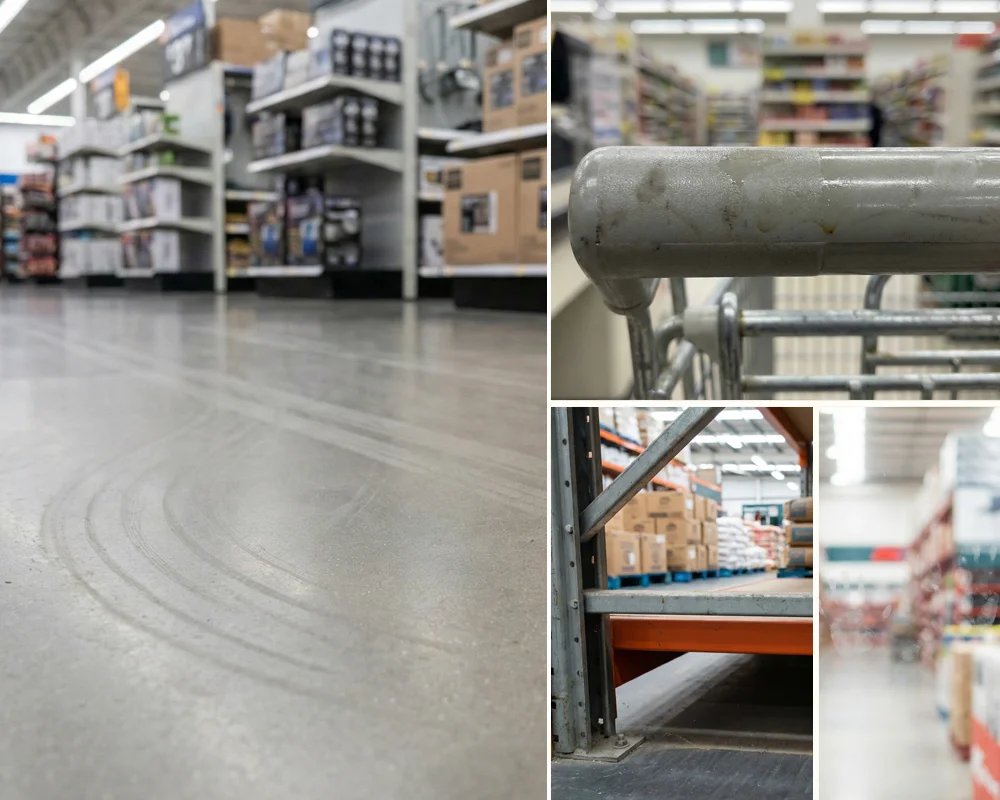
- Entry points from car parks where dirt constantly tracks in
- Stairs, travelators and lift edges where fine black dust settles
- Edges along racking and shelving where detail cleaning is easy to miss
- Under stairwells or low-visibility zones where debris builds up
- Outdoor and car park areas that don’t always get the same attention as inside
None of these are urgent in the moment.
But over time, they become noticeable — especially when everything else is running well.
Getting These Things Done Isn’t Always Simple
Even when these issues are identified, getting them resolved isn’t always straightforward. It often involves:
- Raising it as an additional request
- Getting internal approval
- Waiting for it to be scheduled
- Following it up if it’s delayed
By the time it’s addressed, the issue has usually been sitting there longer than anyone would like. So it ends up being something store and complex managers have to keep an eye on — on top of everything else.
Amenities and Timing Still Matter
At the same time, the day-to-day elements still need to land properly. Bathrooms are a good example. If they’re cleaned too early in the cycle:
- Bins can already be filling by midday
- Supplies drop off before the next round
- Presentation doesn’t hold through peak periods
It’s not usually a lack of effort — just a mismatch between timing and usage.
First Impressions Carry More Weight Than Ever
There’s also the constant pressure of presentation. These environments can be visited at any time — whether it’s internal stakeholders, regional managers, or external inspections. So the expectation isn’t just “clean enough.” It’s:
- Consistent
- Presentable
- Aligned with brand standard at all times
And it doesn’t take much for that to slip:
- Smudged entry glass catching the light
- Marks on brightwork and lift surfaces
- Thresholds and walk-in areas starting to wear
- Entry points from outside not matching the standard inside
Individually, they’re small. But together, they shape how the store is perceived.
These environments can be visited at any time — whether it’s internal stakeholders, regional managers, or external inspections. So the expectation isn’t just “clean enough.”
It Has to Work With the Store
Cleaning in these environments can’t sit separately from operations. It needs to:
- Fit around how the store actually runs
- Adjust as traffic builds and drops
- Respond to issues as they come up
- Cover both the routine work and the detail that builds over time
When it’s working well, it blends into the background.
When it’s not, it becomes something the team has to notice — and manage.
A Shift in What “Good” Looks Like
Expectations have shifted. It’s no longer just about whether the job gets done. It’s about whether the site:
- Holds its standard throughout the day
- Stays aligned with brand expectations
- Doesn’t require constant follow-up to maintain
That’s where the difference tends to show.
A Final Thought
In environments like this, it’s rarely one big issue that stands out.
It’s the small things that build — the areas that get missed, the timing that’s slightly off, the details that don’t quite hold through the day.
Individually, they’re easy to overlook. But together, they’re what determine whether a store feels sharp, consistent, and on standard — or just slightly off.
And that difference is usually felt long before it’s ever called out.