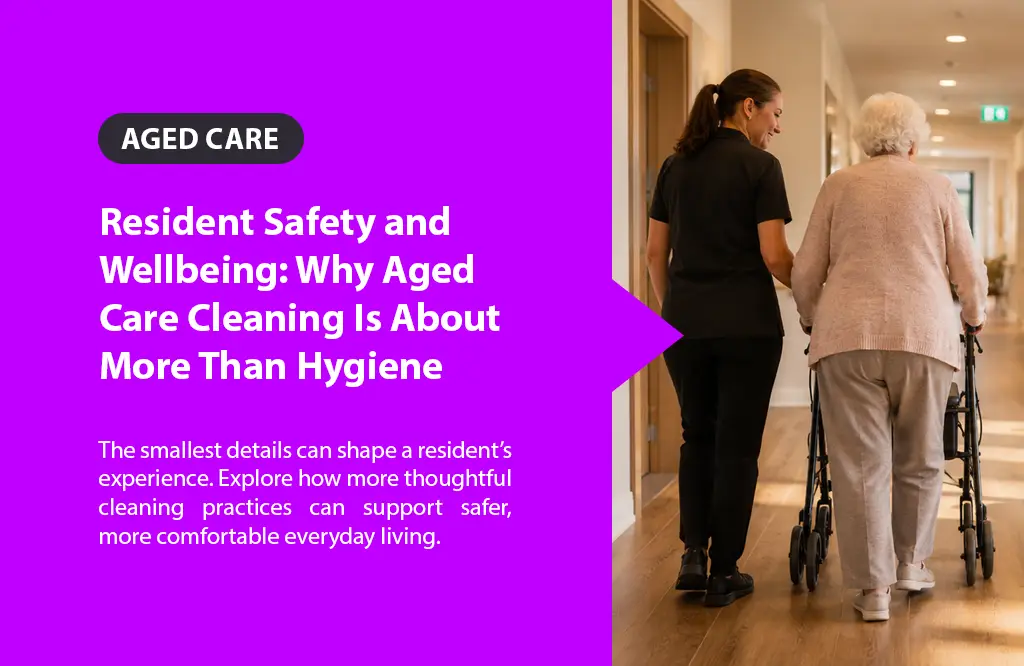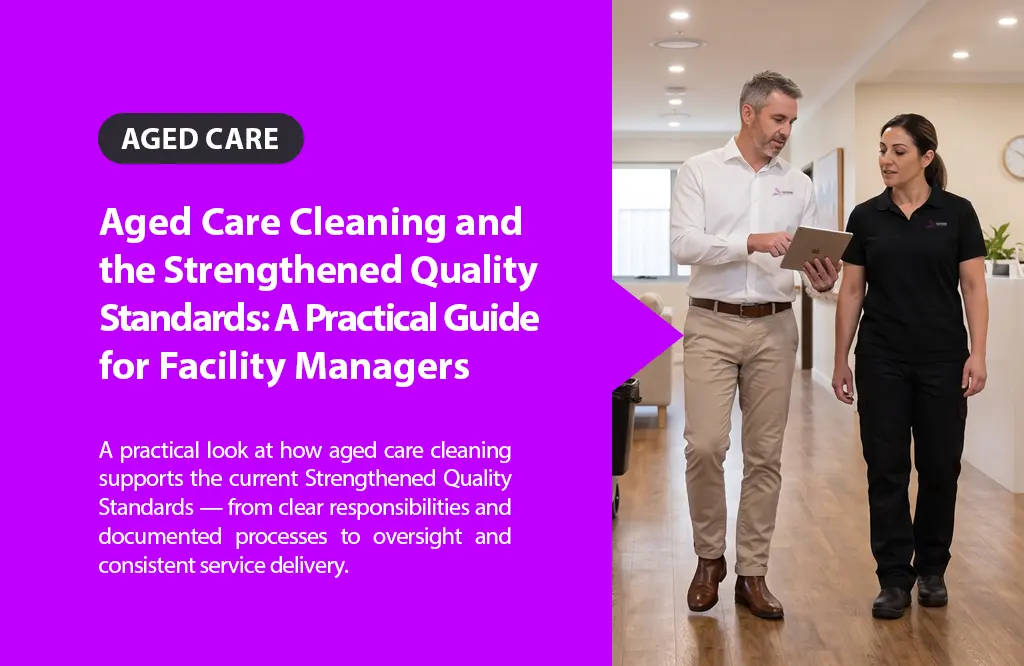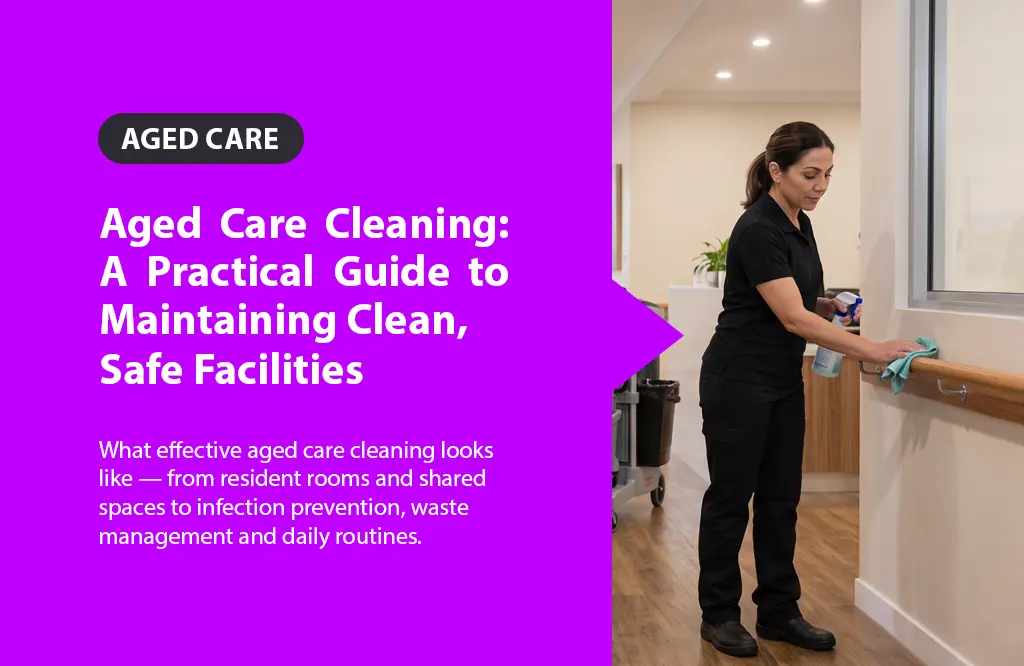
At a glance, aged care cleaning can look much like cleaning any other facility. Floors need attention. Bathrooms need cleaning. Shared spaces need to be kept presentable. But aged care is different. Cleaning takes place within residents’ living environment, alongside care routines, visitors and the day-to-day operation of the facility — making how the cleaning is delivered just as important as the cleaning itself.
Why Aged Care Cleaning Requires a Different Approach
Aged care facilities are more than workplaces or commercial buildings. They are living environments where residents spend much of their day, receive care, share communal spaces and interact with staff, visitors and other residents.
This makes cleanliness an important part of the overall environment of care. Effective aged care cleaning helps maintain hygienic surroundings, supports infection prevention practices and contributes to a facility that feels comfortable, well maintained and welcoming.
However, cleaning an aged care facility requires a different approach from cleaning a conventional office or commercial property. Cleaning teams need to work around residents, care routines and operational requirements while maintaining consistent standards across a wide range of spaces.
This guide explores the key challenges of aged care cleaning, the importance of a structured cleaning program and practical considerations for maintaining a clean and safe facility.
The Challenges of Aged Care Cleaning
Aged care cleaning presents several challenges that require careful planning, appropriate training and consistent service delivery.
A resident-first environment
Unlike many commercial environments, aged care facilities operate around the clock and cleaning often takes place while residents, staff and visitors are present.
Cleaning teams therefore need to consider more than the cleaning task itself. Noise, equipment placement, access to rooms and corridors, chemical use and cleaning schedules can all affect residents and facility operations.
Where possible, cleaning should be planned around resident routines, meals, activities, care requirements and periods of high foot traffic.
Infection prevention considerations
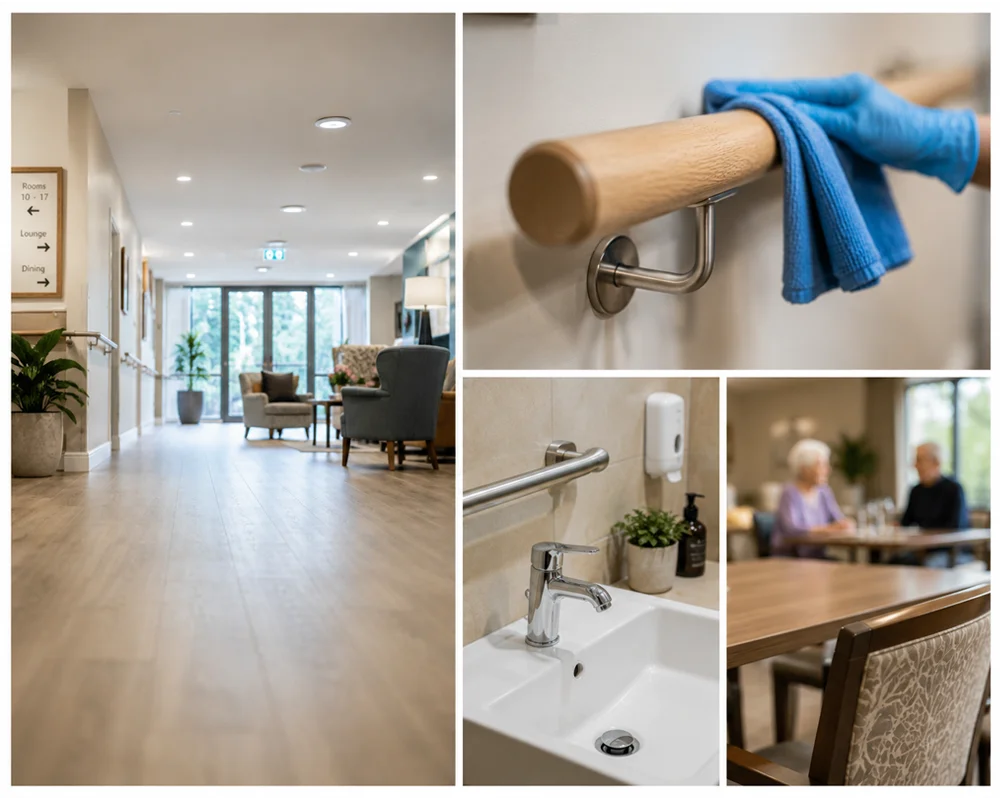
Aged care environments can contain numerous high-touch surfaces and shared spaces, including door handles, handrails, lift buttons, dining furniture, bathroom fixtures and common-area furniture.
A systematic cleaning approach is important to help reduce the accumulation and transfer of contaminants between surfaces and areas.
Cleaning teams also need clear procedures covering matters such as hand hygiene, personal protective equipment (PPE), cleaning equipment, chemical handling, colour coding and the separation of equipment used in different areas.
Different areas require different approaches
An aged care facility can contain resident rooms, communal lounges, bathrooms, dining areas, kitchens, administration spaces, clinical areas, corridors and outdoor spaces.
These environments should not simply be treated as one large cleaning area. The required methods, products, equipment and frequencies can vary considerably depending on the purpose and risk profile of each space.
Why Proper Aged Care Cleaning Matters
The importance of aged care cleaning extends beyond appearance.
Supporting resident health and wellbeing
Residents should be able to live in surroundings that are clean, comfortable and well maintained.
Regular cleaning of frequently used spaces and high-touch surfaces helps support the facility’s broader infection prevention and control measures. It can also improve everyday comfort by addressing dust, spills, odours and general cleanliness.
Just as importantly, cleaning should be carried out respectfully. Residents’ rooms are personal spaces, and cleaners need to understand how to work around residents without unnecessarily disrupting their privacy, belongings or daily routines.
Building confidence in the facility
Cleanliness is also highly visible.
Residents, families, visitors and staff notice the condition of bathrooms, floors, dining areas, entrances and communal spaces. Persistent odours, overflowing bins, dirty surfaces or poorly maintained common areas can quickly affect perceptions of how a facility is managed.
A consistently clean environment can help reinforce confidence that the facility is organised, attentive and professionally maintained.
Supporting facility standards and procedures
Aged care providers operate within an environment of quality, safety, infection prevention and regulatory requirements.
Cleaning is one component of this wider framework. A well-managed cleaning program should therefore be documented, repeatable and aligned with the facility’s own procedures rather than relying on individual cleaners deciding what needs attention from day to day.
Step-by-Step Guide to Aged Care Cleaning
While every facility should have a site-specific cleaning plan, the following provides a practical framework for structuring an aged care cleaning program.
1. Pre-cleaning preparation
Before cleaning begins, staff should understand the areas they are responsible for and the procedures that apply to them.
Preparation may include:
- Reviewing the cleaning schedule and assigned areas.
- Checking whether any areas have special cleaning or access requirements.
- Preparing appropriate cleaning products, PPE and equipment.
- Ensuring reusable equipment is clean and ready for use.
- Identifying wet-floor, access or other potential hazards.
- Confirming any facility-specific infection prevention requirements.
- Coordinating cleaning around resident activities and care routines where necessary.
Good preparation helps reduce unnecessary movement between areas and supports a more systematic cleaning process.
2. Cleaning common areas
Common areas can experience frequent use throughout the day.
Cleaning may include floors, tables, chairs, handrails, door handles, switches and other frequently touched surfaces. Entrances and reception areas may require particular attention because they are often the first areas seen by residents, families and visitors.
Cleaning teams should also monitor these areas throughout the service period rather than relying solely on a single scheduled clean where the facility’s cleaning plan requires more frequent attention.
3. Cleaning resident rooms
Resident rooms require a respectful and careful approach.
Where appropriate, cleaners should announce themselves before entering and follow the facility’s procedures regarding access and resident privacy.
Cleaning may include floors, accessible surfaces, frequently touched points and designated bathroom areas. Personal possessions should be treated carefully and unnecessary movement of residents’ belongings should be avoided.
Equipment and cleaning materials should also be managed appropriately to reduce the risk of transferring contaminants between rooms.
4. Cleaning bathrooms
Bathrooms and toilets generally require particularly thorough cleaning because of the nature of the surfaces and activities within these spaces.
Attention should be given to toilets, basins, taps, grab rails, door handles, shower areas and floors, together with other frequently touched surfaces.
Cleaning should follow an appropriate sequence and use designated equipment and products in accordance with the facility’s procedures.
5. Cleaning dining areas
Dining areas need to be clean and ready for residents at meal times.
Tables, chairs and other relevant surfaces should be cleaned according to the facility’s requirements, with spills addressed promptly and floors maintained appropriately.
Scheduling is particularly important. Cleaning should support meal service rather than creating unnecessary disruption while residents are eating or staff are preparing the area.
6. Cleaning and disinfection
Cleaning and disinfection are related but distinct processes.
Cleaning removes dirt, organic matter and other contaminants from a surface. Disinfection uses an appropriate product or process to reduce microorganisms on the surface.
Where disinfection is required, products should be used according to their instructions, including correct dilution and contact time. Applying disinfectant and immediately wiping it away may not provide the intended result if the product requires the surface to remain wet for a specified period.
7. Waste removal
Waste should be collected regularly and handled according to the type of waste and the facility’s procedures.
Bins should not be allowed to routinely overflow, and cleaning staff should understand how general waste and any separately managed waste streams are to be handled.
Waste handling should also be incorporated into broader infection prevention practices, including appropriate hand hygiene and PPE where required.
8. Post-cleaning checks
Cleaning should not finish simply because every task has been marked off a list.
A final check can identify missed surfaces, remaining spills, overflowing bins, improperly stored equipment or other issues requiring attention.
Routine inspections and supervision can also help identify recurring problems and determine whether cleaning frequencies or procedures need to be adjusted.
Waste Management in Aged Care Facilities
Waste management is an important component of maintaining a hygienic aged care environment.
Poorly managed waste can contribute to unpleasant odours, contamination risks, pest problems and hazards for residents, employees and visitors.
Cleaning teams should understand the facility’s procedures for the waste streams they are authorised and trained to handle.
Good practices can include using the correct bins and liners, preventing overfilling, securely handling waste bags, maintaining clean waste-storage areas and performing appropriate hand hygiene after waste handling.
Where clinical, infectious, pharmaceutical, sharps or other specialised waste is present, it should be managed according to the facility’s specific procedures and applicable requirements. Cleaning personnel should only undertake tasks for which they have been appropriately trained and authorised.
In aged care, effective cleaning is about more than maintaining a clean facility. It’s about doing it in a way that respects the people who live there.”
Cleaning During COVID-19 and Other Infectious Disease Events
COVID-19 highlighted how quickly respiratory illness can affect residential aged care environments.
Although aged care facilities have moved beyond the emergency conditions experienced during the height of the pandemic, COVID-19 and other infectious diseases remain relevant considerations for cleaning programs.
During an outbreak or period of increased infection risk, a facility may introduce enhanced cleaning and disinfection procedures.
Depending on the circumstances, this may include increased attention to frequently touched surfaces, additional cleaning of affected areas, specific PPE requirements, dedicated cleaning equipment or changes to normal cleaning frequencies.
Cleaning teams should follow the facility’s current infection prevention and control procedures and any applicable public health guidance rather than relying on generic or outdated pandemic-era practices.
Clear communication between facility management, care teams and cleaning personnel becomes particularly important when requirements change during an outbreak.
Key Tips for Effective Aged Care Cleaning
Choose products for the environment
Cleaning products should be suitable for their intended surfaces and tasks and used according to manufacturer instructions.
More chemical does not necessarily mean better cleaning. Correct product selection, dilution, application and contact time are important for both effectiveness and safe use.
Invest in staff training
Even a well-designed cleaning plan depends on the people carrying it out.
Cleaning staff should receive appropriate training in cleaning methods, chemical handling, PPE, equipment use, infection prevention practices and the procedures relevant to their facility.
Facility-specific induction is particularly valuable because no two aged care environments operate in exactly the same way.
Use planned periodic and detailed cleaning
Routine cleaning should be supported by scheduled detailed cleaning for areas and items that may not require daily attention.
This could include periodic floor care, detailed cleaning of fixtures and fittings, high-level surfaces or other tasks identified in the facility’s cleaning plan.
A planned approach helps prevent these less frequent tasks from being overlooked.
Maintain communication with residents and staff
Cleaning teams are part of a much larger facility operation.
Good communication allows cleaners to understand changing requirements, report problems and respond to feedback.
Staff should also have a clear process for reporting issues such as spills, damaged fixtures, persistent odours or areas requiring additional attention.
For residents, simple behaviours such as announcing entry, explaining what is being cleaned and avoiding unnecessary disruption can make a significant difference to the experience of the service.
Building a Consistent Aged Care Cleaning Program
Effective aged care cleaning is not achieved through occasional intensive cleaning alone.
It requires a structured program combining appropriate daily routines, scheduled periodic tasks, trained personnel, suitable products and equipment, clear responsibilities, supervision and ongoing communication with facility management.
Cleaning plans should also be specific to the facility. Factors such as resident needs, building layout, occupancy, communal spaces, clinical areas, operating routines and infection prevention procedures can all influence what should be cleaned, how frequently and by which method.
Regular inspections and service reviews can then be used to identify gaps and adjust the program as the facility’s requirements change.
A Final Thought
A clean aged care facility contributes to much more than presentation.
It supports resident comfort and wellbeing, infection prevention practices, safer working environments and confidence among residents, families, visitors and staff.
Achieving this consistently requires an approach designed specifically for aged care — one that recognises that cleaners are working within residents’ living environments as well as an active care facility.
With appropriate training, clearly defined cleaning plans, careful waste handling, effective communication and regular quality checks, aged care providers can establish cleaning programs that support both day-to-day operations and the standard of environment residents deserve.
For facilities reviewing their current cleaning arrangements, the starting point should be understanding the individual needs of the site and developing a cleaning program around those requirements rather than applying a generic commercial cleaning schedule.